Topics
Traction control, pulse patterns, and system utilisation.
The technical topics connect scientific methodology with practical drive control. The focus is on electric machines, inverters, and embedded systems in which efficiency, dynamics, and robustness are improved not only by adding hardware, but by more precise control methods.
Technical focus
High-Performance Control for highly demanding applications
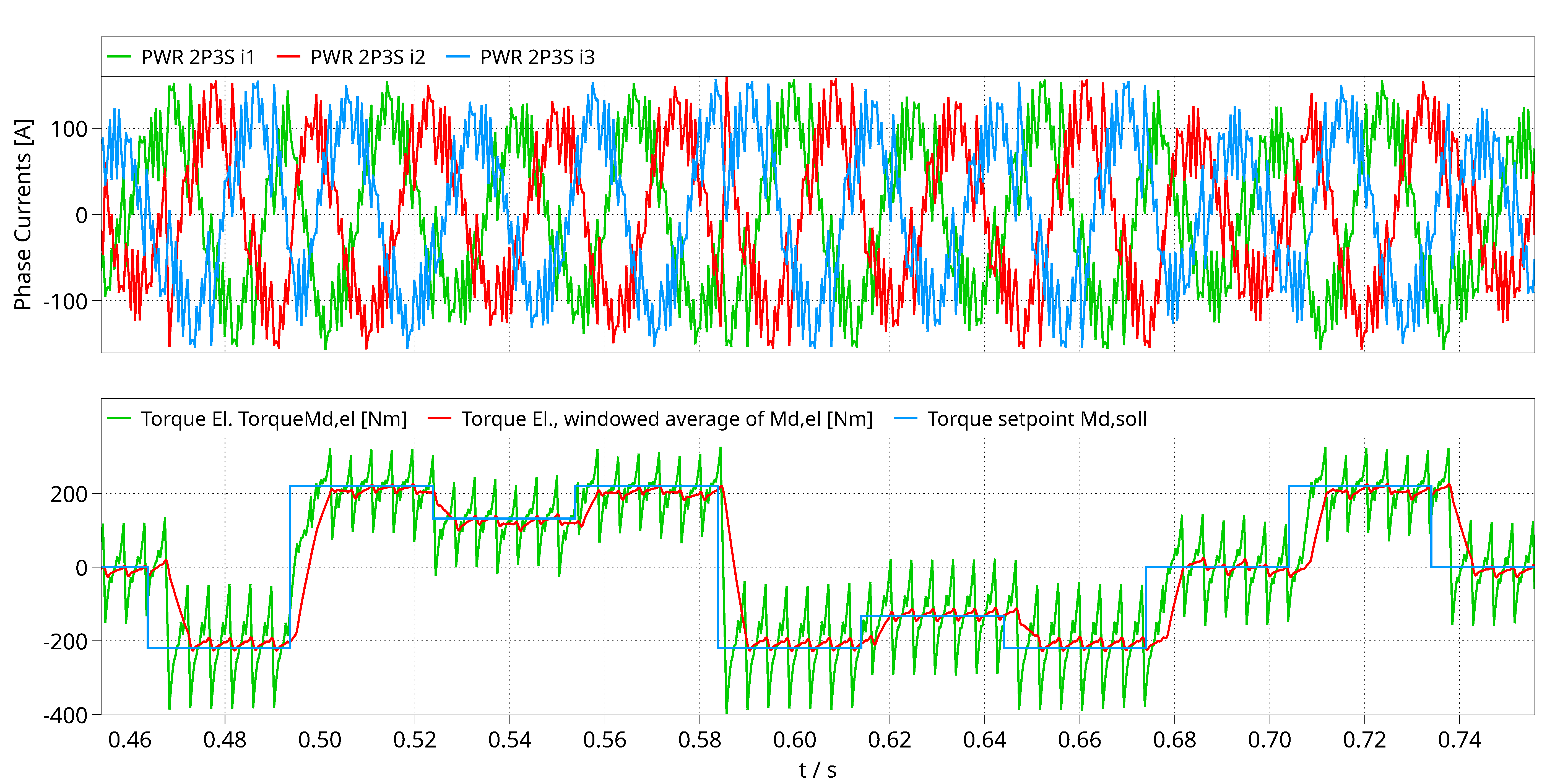
The focus is on control methods for medium- and high-power inverters. The best possible dynamics can be achieved even when only a very low switching frequency is available: torque is adjusted within a single switching action or within a small number of switching actions, making maximum dynamics available without reserving control margins or modulation headroom.
Technical focus
Synchronous modulation as the technical core
Optimised synchronous modulation, referred to in English as optimised pulse patterns (OPP), forms a methodological core. It enables targeted shaping and optimisation of the operating behaviour of a rotating-field machine. Significantly reduced switching losses and high dynamics enable cost-effective inverter and drive design.
Technical focus
Low-loss operation as a result
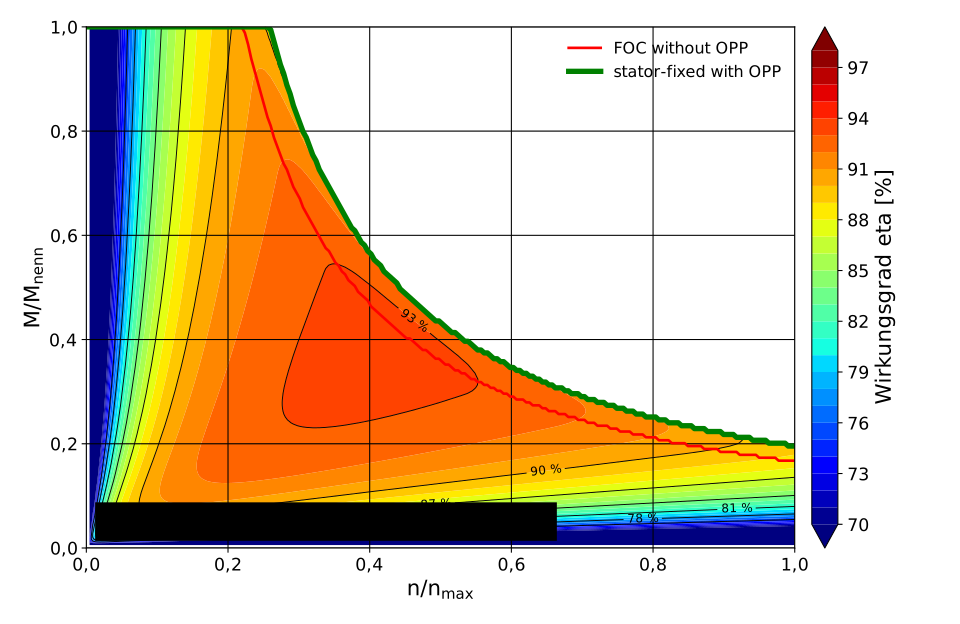
Low-loss operation is not treated as an isolated method, but as the result of suitable pulse patterns, control methods, and operating strategies. The relevant question is how an existing machine and inverter can be operated so that efficiency gains become attainable without unnecessary complexity.
Technical focus
Inverter and system utilisation
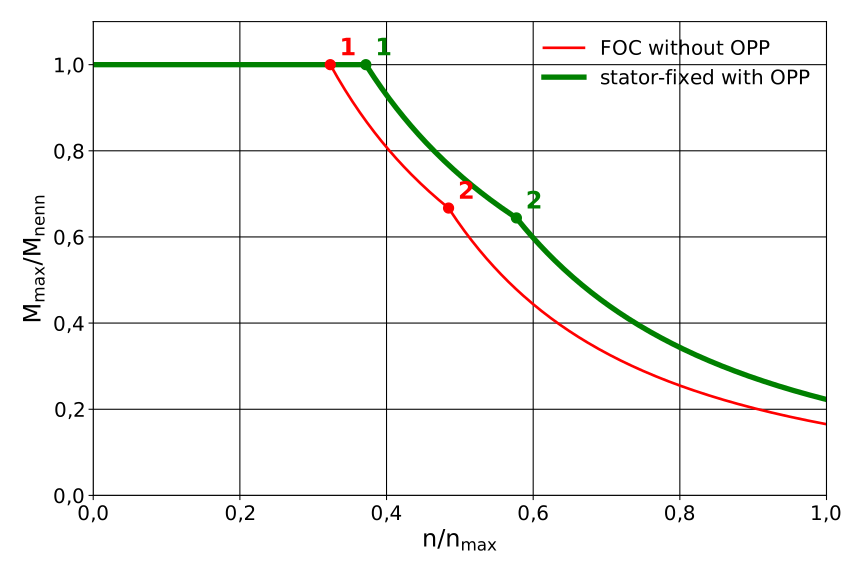
Existing systems often contain considerable power and dynamic reserves that can be fully exploited through suitable control. Depending on the objective, the power limit can be increased, losses can be reduced, or the drive design can be made more cost-effective.
Technical focus
Modelling and commissioning
High-performance, model-based inverter control must still remain easy to parameterise. Straightforward commissioning is ensured through methods and instructions that support simple troubleshooting and accelerated commissioning.
Technical focus
Embedded implementation and hardware context
Long-standing experience with FreeRTOS- and mbedOS-based firmware development, C/C++, circuit and PCB design, and RF systems complements the control perspective. This keeps implementation on microcontrollers, measurement setups, and real systems in view.
Technical focus
Applications
The methods are particularly relevant for traction applications, but they can also be placed in the context of generators, motors, auxiliary converters, and special electric-drive systems. The decisive factor is the combination of scientific grounding and system-level implementation.